Family Therapy Support: In Outpatient Care in Georgia
In outpatient care, family therapy support can connect treatment goals with daily relationships, communication, and routines. Adults continue living in the community while attending scheduled services, so informed support can be valuable between visits.
Editorial lead: Tim Francis. Educational content receives source-based editorial review.
- LocationColumbus, GA3822 Rosemont Drive, Columbus, GA 31904
- Levels of careOutpatientPHP, IOP, Evening IOP, and outpatient therapy
- Admissions706-617-4970A private first call about fit and next steps
- Listed facility hoursMon–Fri9:00 AM to 5:00 PM; closed Saturday and Sunday
At a Glance
In outpatient care, family therapy support can connect treatment goals with daily relationships, communication, and routines. Adults continue living in the community while attending scheduled services, so informed support can be valuable between visits. River City Recovery considers family involvement in relation to individual needs, assessments, and the outpatient plan.
River City Recovery’s published outpatient programs are based in Columbus, GA. You can review IOP, PHP, and insurance verification when you are ready.

The role of family support in outpatient care
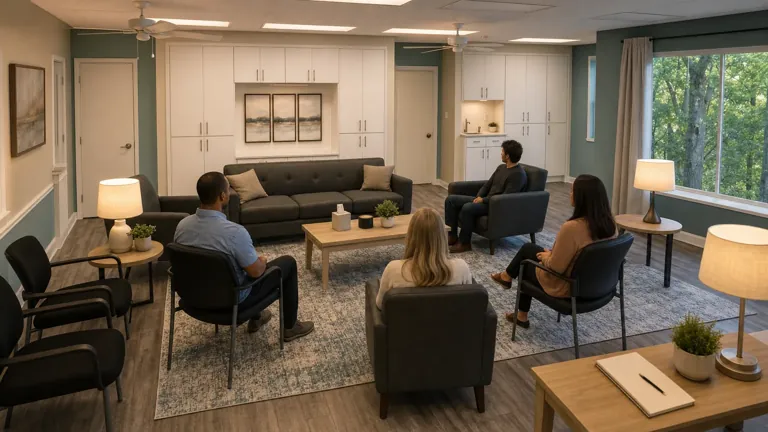
Outpatient treatment happens alongside everyday responsibilities and relationships. An adult may return home after scheduled services and immediately face familiar stressors, conversations, or routines. Family therapy support can help bring treatment-related learning into that daily environment without making loved ones responsible for delivering care.
- Family support can strengthen everyday outpatient care
- The adult’s needs remain central to family involvement
Support people may benefit from understanding the purpose of treatment and the importance of consistent communication. They may also need space to discuss their own questions about boundaries, trust, and changing roles. Structured conversations can replace assumptions with clearer expectations and practical plans.
The adult receiving services remains at the center of care. Family involvement should reflect that person’s needs and the treatment approach. It may be useful at some points and less appropriate at others. Admissions and assessment processes can help clarify how support may fit.
How different outpatient levels may fit

River City Recovery offers a Partial Hospitalization Program, Intensive Outpatient Program, an evening IOP schedule, and outpatient therapy. These options vary in structure and scheduling. A clinical or medical assessment helps identify an appropriate option based on the adult’s needs rather than a family’s preference alone.
- Assessment helps match adults with suitable outpatient structure
- Evening IOP offers scheduled care in Columbus, GA
Services may include individual therapy, medication management, medical oversight, and drug testing and monitoring. Case management, care coordination, and referrals can help address practical or outside-service needs. Family support can complement these components, but it does not replace assessment, individual participation, or medical decision-making.
The Columbus facility’s hours are Monday through Friday, 9:00 AM to 5:00 PM. An evening IOP meets on Monday, Wednesday, and Thursday from 6:15 to 9:15 PM. Prospective participants should reconfirm the current schedule with admissions.
Keeping support practical and respectful
Useful support often begins with direct, respectful communication. Loved ones can ask what kind of help is wanted instead of assuming. They can also state their own boundaries clearly. Specific language tends to be easier to understand than broad criticism or repeated arguments about past events.
- Clear boundaries can keep family support respectful
- Difficult conversations may lead to useful plan adjustments
Support does not require monitoring every choice. The adult in care remains responsible for participation and personal decisions. Family members can encourage treatment-related routines, listen, and follow agreed plans while avoiding control. This distinction can protect relationships and reduce confusion about roles.
Setbacks or difficult conversations do not automatically mean that support has failed. They may show that a plan needs adjustment. Outpatient therapy, case management, and care coordination provide opportunities to review needs. River City Recovery cannot promise outcomes, but it can offer structure for continued work.

Levels of care
Outpatient Levels of Care in Columbus, GA
Partial Hospitalization (PHP)
Structured daytime outpatient care with clinical oversight.
Explore Partial Hospitalization (PHP)Intensive Outpatient (IOP)
Several treatment sessions each week while you keep up with daily life.
Explore Intensive Outpatient (IOP)Evening IOP
Intensive outpatient care scheduled after typical work hours.
Explore Evening IOPOutpatient Therapy
One-to-one therapy on a less intensive schedule.
Explore Outpatient Therapy
Planning the next step from anywhere in Georgia
River City Recovery’s outpatient services are based at 3822 Rosemont Drive in Columbus. People considering care should account for travel and scheduled attendance. Admissions can describe the Columbus programs so callers can decide whether an assessment is a reasonable next step.
- Outpatient care requires regular travel to Columbus, GA
- Referrals may help with needs outside outpatient care
Prepare a concise summary of current concerns, relevant treatment needs, and scheduling considerations. Ask how the assessment process works and what role a support person may have. If using insurance, verify plan-specific coverage and benefits because acceptance should not be assumed without confirmation.
A person who needs one of those settings requires a different resource. Care coordination and referrals may help with needs outside the facility’s outpatient scope.

A practical next step
Get clarity on insurance and care
Coverage depends on your plan and the care being considered. Our admissions team can explain verification and help you understand the next step.
Frequently Asked Questions
Can family support be part of IOP?
Family support may complement outpatient services, including IOP, when it fits the adult’s assessed needs and care approach. Admissions can explain available options, while the treatment process helps determine appropriate participation and goals.
Does outpatient care mean living at the facility?
No. Outpatient services do not include living at River City Recovery. Participants attend scheduled care in Columbus while continuing to live outside the program.
What other outpatient supports are available?
Available services include individual therapy, medication management, monitoring, case management, family support, care coordination and referrals, clinical or medical assessments, and medical oversight. The services used depend on individual needs.
Can someone outside Columbus use these services?
People elsewhere in Georgia can contact admissions, but services are based in Columbus. The person should consider travel and attendance requirements. Calling can clarify scheduling and whether the Columbus-based outpatient model appears suitable.
How is an adult’s privacy handled when family support is involved?
The adult’s privacy and choices remain central when family support is part of outpatient care. Participation depends on the person’s preferences, needs, relationships, and care plan. Admissions can provide general information to loved ones, while individual treatment details and decisions stay within appropriate privacy boundaries.
Admissions
Talk with River City Recovery
Call 706-617-4970 to talk with admissions about outpatient options in Georgia.
Related Topics