
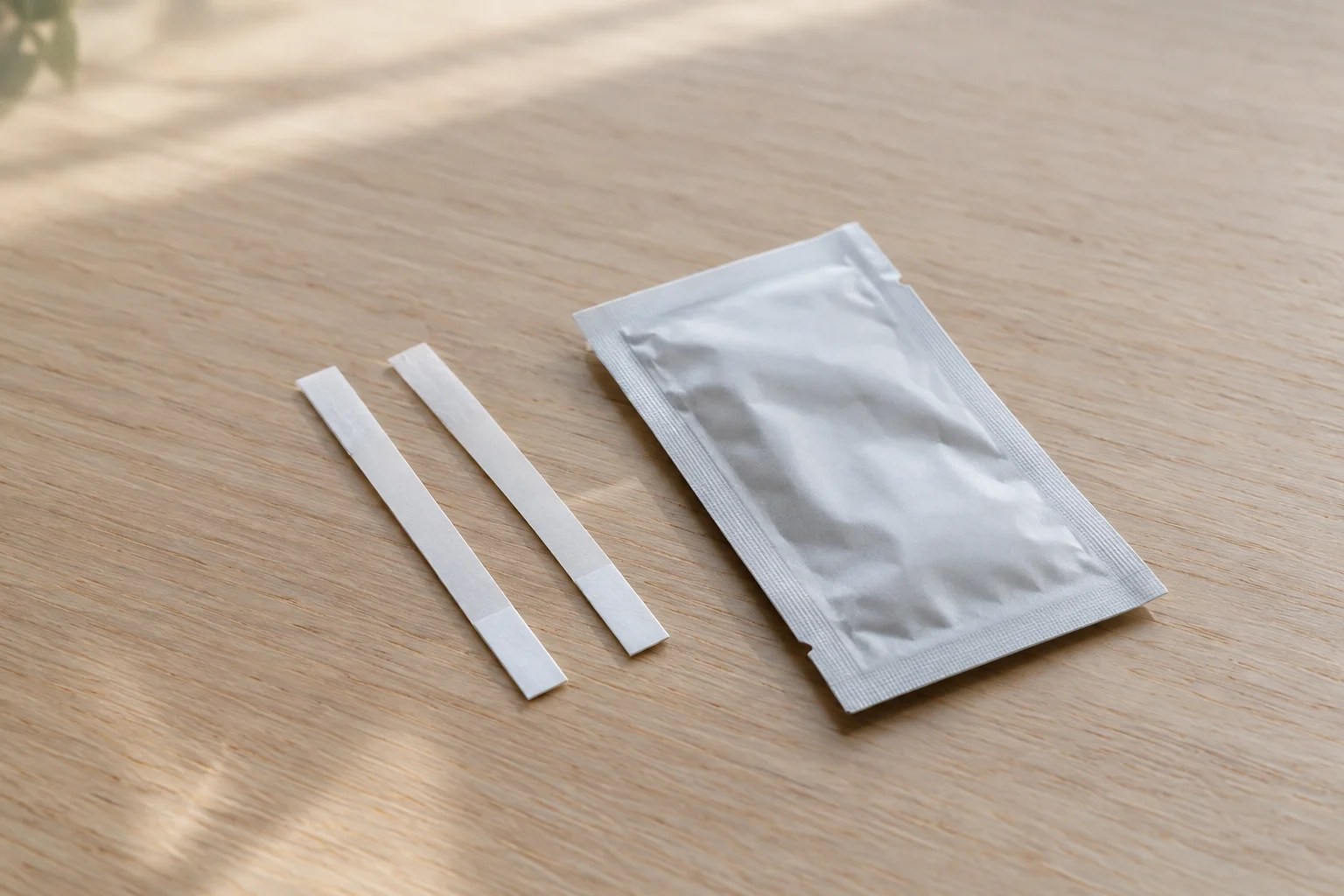
Fentanyl test strips can help identify fentanyl, but a negative result does not establish that a drug is safe. The tested sample may not represent the rest, and some related substances can escape detection. Results also do not establish potency, rule out other drug hazards, or diagnose a substance use disorder.
If you are trying to understand a result for yourself or someone you love, the most important distinction is between limited information and reassurance. Drug checking addresses whether a particular substance is detected. It does not answer every question about what a drug contains or how it could affect someone. NIDA explains that fentanyl test strips have specific limitations, including problems with the sample tested and detection of some related drugs. This guide explains those limits without providing testing preparation instructions. It also separates checking a drug from responding to an emergency and receiving ongoing care.
What can fentanyl test strips detect?
Fentanyl test strips can check for the presence of fentanyl in drugs or pills. Their purpose is narrower than recognizing opioid overdose warning signs or deciding whether outpatient treatment fits someone’s needs. A result provides information about a tested sample, not a complete assessment of the substance or the person.
NIDA describes fentanyl as a powerful synthetic opioid that may be added to other drugs without the person knowing. You cannot determine whether another drug contains fentanyl by looking at it, tasting it, or smelling it. That is why drug checking can provide information that appearance alone cannot. However, having more information is not the same as having complete information.
The useful question is specific: did the test detect fentanyl in what was tested? That question is different from whether every part of the drug supply is the same, whether another dangerous substance is present, or whether the person has developed dependence. Keeping those questions separate helps prevent a result from being given more meaning than it supports.
- Detection concerns the substance the test is designed to identify.
- Representativeness concerns whether the tested sample reflects the rest of the supply.
- Potency concerns how powerful a drug is, which a detection result does not establish.
- Diagnosis concerns a person’s pattern of substance use, symptoms, and related difficulties.
Why can the tested sample fail to represent the whole drug supply?
The tested sample may not contain fentanyl even when another part of the drug does. A negative result therefore does not cancel other safety concerns, including overdose risk after a break from opioids, and it should not override signs that require an emergency response.
NIDA identifies this sampling problem directly: the small sample being tested may not include fentanyl that is present elsewhere. The limitation is about what the test had an opportunity to detect. A result from one portion cannot establish what was present in portions that were not tested. This remains a limit even when the result seems clear.
It helps to separate two statements: “Fentanyl was not detected in this sample” and “There is no fentanyl anywhere in this drug.” The first describes a result. The second makes a broader claim that the result cannot support. You do not need to know exactly where fentanyl might be present to understand why those statements are not interchangeable.
The same reasoning limits how far a result can be carried forward. It describes the material tested, not other material that was never checked. It is not a lasting safety label for a supply. Separately, NIDA warns that returning to a previously used amount after a period without use can cause overdose. A strip does not assess that personal risk.
Why can some related substances escape detection?
Some fentanyl-related drugs may not be detected by fentanyl test strips. This is a different limitation from an unrepresentative sample. It also helps explain why discussing more than one substance and understanding opioid overdose response remain relevant even when a checking result is negative.
NIDA states that test strips may not detect some similar drugs and identifies carfentanil as an example of a fentanyl-like substance that is even stronger and more likely to cause overdose. The important point is the detection limit, not memorizing drug names. A test designed to check for fentanyl is not a universal screen for every related substance.
Sampling and detection limits answer separate questions. With sampling, the concern is whether the substance was present in the tested portion. With detection, the concern is whether the test can identify the substance at all. Neither limit disappears because the other one seems less concerning. A result cannot establish that all possible fentanyl-related hazards have been excluded.
There can also be hazards unrelated to fentanyl. NIDA describes serious effects of methamphetamine itself, including irregular heartbeat and stroke, as well as risks when opioids are involved. Not detecting fentanyl does not remove the effects of another drug. Checking for one ingredient cannot establish that the remaining substance is harmless.
What does a negative result not establish?
A negative result does not establish overall safety, potency, or a diagnosis. It also cannot determine someone’s tolerance or whether they need opioid use disorder treatment. Those are separate issues, including the possibility of increased overdose risk after a break, rather than conclusions a strip can provide.
A negative result can feel like a simple yes-or-no answer to a much larger concern. The safer interpretation keeps the conclusion narrow. NIDA’s fentanyl guidance explains why fentanyl may still be present despite a negative result. Its guidance does not present a negative result as proof that a drug is safe to take.
| Issue | What the result can address | What it cannot establish |
|---|---|---|
| Fentanyl detection | Whether fentanyl was detected in the tested sample | That every portion is free of fentanyl |
| Related substances | Detection within the test’s limits | Absence of every fentanyl-like substance |
| Strength and safety | Limited information about one ingredient | Potency or overall drug safety |
| Personal health | Information about material that was tested | Tolerance, dependence, or a substance use disorder diagnosis |
A positive result also has boundaries. It is a warning about detection, not a measurement of strength or a diagnosis of the person. NIDA describes opioid use disorder through patterns of symptoms and behavior, such as difficulty controlling use, cravings, and continued use despite harm. Testing a substance does not establish those patterns, and a negative result does not rule them out.
How does drug checking differ from overdose response and treatment?
Drug checking examines a substance; overdose response addresses an immediate medical emergency; treatment addresses an ongoing health condition. Understanding opioid overdose response and the different purposes of naloxone and naltrexone helps keep these roles separate. A strip result is not a decision rule for whether someone needs emergency help.
If someone cannot be awakened or has slow, shallow, or difficult breathing, respond to the emergency rather than relying on a previous result. NIDA directs people who suspect an opioid overdose to call 911 and use available naloxone. Do not delay emergency care to check a drug. A negative strip result cannot explain away severe symptoms or establish what caused them.
- Drug checking provides limited information about a substance.
- Emergency response addresses a person’s immediate danger, regardless of a previous checking result.
- Overdose reversal medication addresses opioid overdose, not an ongoing substance use disorder.
- Treatment addresses substance use patterns and related medical, mental health, and daily-life needs.
NIDA identifies medications as the standard of care for opioid use disorder, with behavioral therapy also playing a role. A test strip does not provide those treatments. It cannot address withdrawal, reduce an established pattern of compulsive use through therapy, or determine which medication is appropriate. These differences do not make checking meaningless; they define what it does and does not do.
For emotional distress or a substance use crisis, 988 provides crisis support. For a suspected overdose or other immediate medical danger, call 911. NIDA distinguishes these emergency and crisis resources. Routine treatment contact and drug checking should not stand between someone and urgent help.
How can harm reduction and ongoing care serve complementary purposes?
Harm reduction and treatment can address different needs without competing with each other. Checking may reveal a hazard, while ongoing care addresses the wider pattern of substance use and health. The broader guide to choosing drug treatment and River City Recovery’s Intensive Outpatient Program (IOP) explain care beyond the interpretation of a single result.
NIDA recognizes fentanyl test strips as a way to reduce risk while also describing their limits. It separately describes opioid addiction as a treatable medical condition. Those points fit together: information about possible fentanyl exposure can matter now, while treatment can address cravings, repeated use despite harm, and other needs over time. Neither purpose requires pretending the other has been fully addressed.
Ongoing care should match the substance and the person. NIDA recommends treatment tailored to drug use patterns and medical, mental health, and social concerns. For opioid use disorder, medication is central. For methamphetamine use disorder, NIDA describes effective behavioral treatments and no FDA-approved medication specifically for that disorder. One checking result cannot select between these approaches.
River City Recovery provides adult outpatient care in Columbus, GA, including PHP, IOP, Evening IOP, outpatient therapy, assessment, medication management, and coordination or referrals. These verified outpatient programs do not establish on-site medical detox or availability of a particular opioid treatment medication. The Partial Hospitalization Program is also outpatient care, not an overnight or emergency setting.
You do not need a positive test or a self-diagnosis to discuss concerns about substance use. If outpatient care in Columbus, GA may be useful, you can call 706-617-4970 or contact River City Recovery. A conversation can begin without a complete plan. The key distinction remains: a result describes limited information about a substance, not the whole picture of someone’s health.
Frequently asked questions
Does a negative fentanyl test strip result mean a drug is safe?
No. A negative result does not establish that a drug is safe. NIDA explains that the tested sample may not contain fentanyl present elsewhere and that some related substances may escape detection. The result also does not measure potency or rule out hazards from other ingredients.
Can fentanyl test strips tell how strong a drug is?
A fentanyl detection result does not establish potency. It addresses whether fentanyl was detected in the tested material, not how powerful the drug is or how it will affect someone. NIDA describes fentanyl as highly potent, but a strip result cannot translate that general risk into a personal safety assurance.
Why might a strip miss fentanyl that is present?
The tested portion may not represent the rest of the drug. NIDA specifically warns that a small sample may contain no fentanyl even when the drug does. Separately, some fentanyl-like substances may not be detected. These are two distinct reasons a negative result cannot establish absence of every opioid hazard.
Should a negative result change the response to suspected overdose?
No. A previous result should not delay emergency care. If someone cannot be awakened or has slow or difficult breathing, NIDA advises calling 911 for suspected opioid overdose and using available naloxone. Respond to the person’s condition, not reassurance from a checking result. A strip does not diagnose an overdose.
Does testing a drug diagnose a substance use disorder?
No. Testing concerns the material checked, while diagnosis concerns the person. NIDA describes opioid use disorder through patterns of symptoms and behavior, including cravings, difficulty controlling use, and continued use despite harm. A positive result does not establish that diagnosis, and a negative result does not rule it out.