
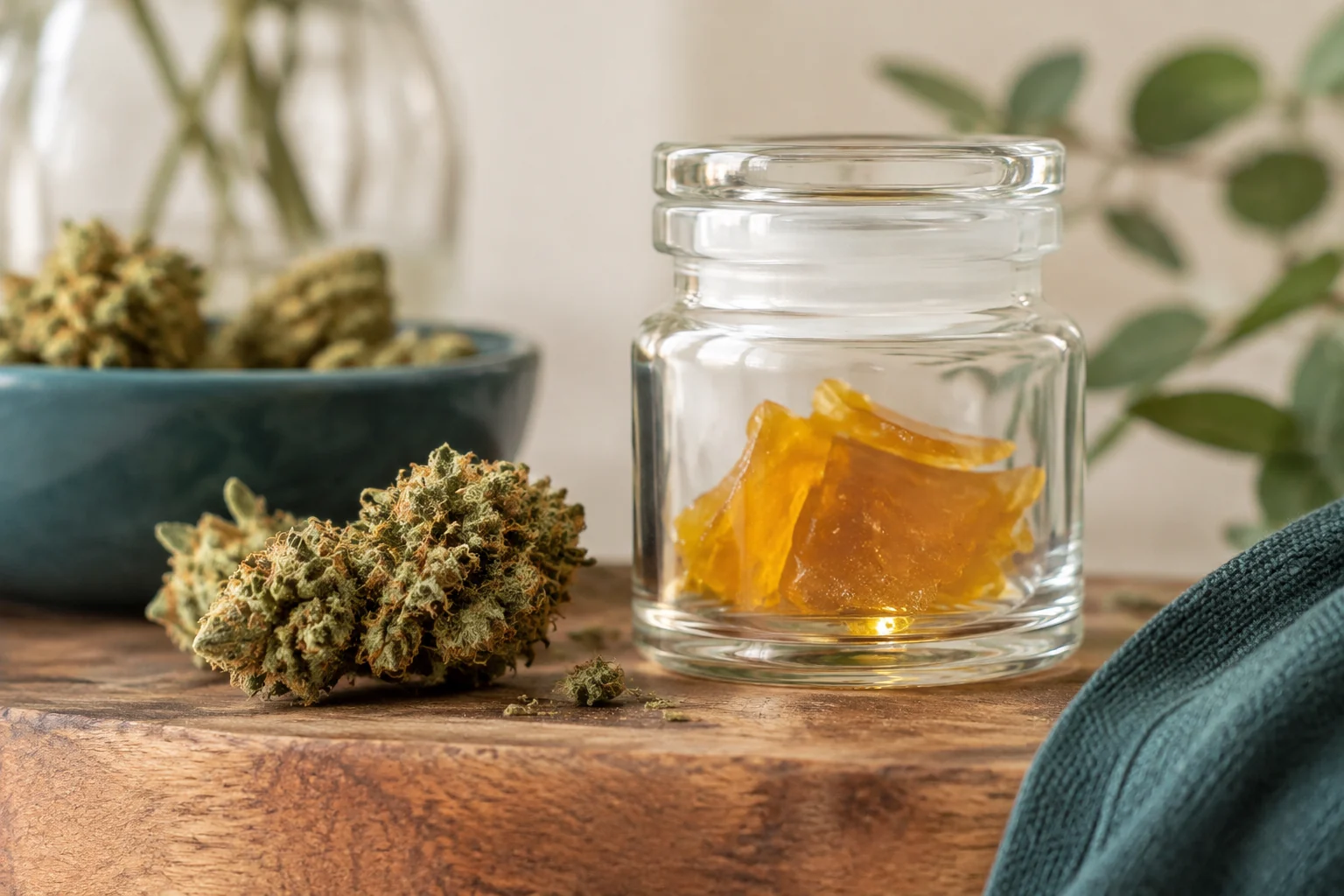
Cannabis concentrate risks depend on more than a product's THC strength. MedlinePlus says effects vary with THC level, amount, frequency, the way cannabis is taken, and personal factors. Strength matters, but it cannot tell the whole story or predict one person's outcome.
For adults in GA and their loved ones, the key is to separate three things: product strength, the pattern of use, and the health effect being studied. Those are related, but they are not the same. The broad scope of cannabis research means a finding may not answer a question about one concentrated oil.
What does THC potency tell you about a concentrate?
THC potency describes product strength, not a sure result for the person using it. THC level is one of several things that can shape effects. When health concerns arise, drug treatment needs to fit the person's pattern of use, and care for other health needs still matters. Neither role depends on a label alone.
THC is the main cannabis chemical that causes a high. CBD is another active chemical, but it does not cause a high. MedlinePlus makes that distinction and lists concentrated oils as one form of use. It calls smoking those oils dabbing. That term names a way of using a product, not its health outcome.
A strength figure does not tell you how much someone used. It also leaves out how often they use and whether they took other drugs or medicines at the same time. MedlinePlus lists these as factors that can change effects. Comparing strength alone leaves those parts of the exposure out.
Other factors named by MedlinePlus include:
- Ingredients and the way the product enters the body.
- Other health conditions and past experience with cannabis.
- Age and sex.
The 2021 medical review notes that responses may differ even between uses by the same person. A past response, then, is not a guarantee of the next one. This does not make strength irrelevant. It means strength is one part of the picture, alongside what was used and the person who used it.
Are concentrated oils always worse than cannabis flower?
No simple ranking makes concentrated oils worse than flower for every health concern. Effects depend on strength, route, and the person. In care, physical health concerns need their own attention, while substance use treatment addresses the use pattern. The type of harm matters more than a broad “better or worse” label.
“Worse” might mean more trouble thinking during a high, more risk of addiction, or a lung problem after smoking. These are not one outcome. MedlinePlus treats short-term effects, addiction, and long-term health concerns separately. It does not give a head-to-head safety score for oils and flower across all of them.
MedlinePlus lists these forms and routes of cannabis use:
| Form | Route described | What form alone leaves out |
|---|---|---|
| Plant material | Smoked in a joint or pipe | The amount used and the person's response |
| Concentrated oils | Smoking the oils, called dabbing | The full pattern of use and personal health factors |
| Food and drinks | Taken by mouth | A comparison of overall risk with other routes |
For lung concerns, the route is a key part of the claim. MedlinePlus links frequent cannabis smoking with cough and breathing problems. That statement concerns smoking; it does not compare every oil with every flower product. Dropping the word “smoking” would change what the source says and suggest a broader finding than it supports.
Likewise, a warning about strength is not a ranking of all methods. MedlinePlus says stronger products raise addiction risk. That is a reason to take high THC seriously, but not proof that every form has the same risk for every type of harm.
What negative effects can cannabis have?
Yes, cannabis can have unwanted effects, but a list of possible effects is not a forecast for every concentrate user. MedlinePlus describes changes in thinking, movement, mood, and reaction time. Drug treatment planning and physical health care have different roles when these concerns arise; one should not stand in for the other.
During a high, possible short-term effects include:
- Changes in senses or time, such as colors seeming brighter or minutes seeming longer.
- Problems with movement, thinking, memory, or solving problems.
- Changes in mood, greater appetite, and slower reaction time.
These are possible changes, not a set of effects that everyone will have. Use patterns and personal factors can change the response. The list alone cannot show which effect a person will have or how strong it will be.
Long-term, heavy use has a different concern: repeated nausea, vomiting, and stomach pain. MedlinePlus calls this cannabinoid hyperemesis syndrome, or CHS. The name describes a health problem, not a measure of THC strength. The medical review discusses CHS and other causes of similar symptoms. A product label cannot make that diagnosis, and the sources do not show that it happens to everyone.
MedlinePlus also links heavy, long-term use with heart, digestive, cancer, and mental health concerns. “Linked with” describes a reported connection. It does not prove that an oil caused a new symptom in one person. Nor does it tell how often a named problem occurs among users of a given concentrate.
For people who began using as teens, MedlinePlus notes possible problems with thinking, memory, learning, and brain development. The age when use began is part of that statement. It should not be replaced with a claim that one high-THC product always causes lasting harm.
The review's lung section describes conflicting research summaries on lung cancer. One found a higher risk with inhaled cannabis; another found moderate evidence of no statistical link with smoking. The authors call for more research. Neither finding settles the cancer risk of a particular concentrate. Different products and routes should not be treated as identical.
Can high THC predict addiction or withdrawal?
High THC is a risk factor, not a diagnosis or a withdrawal forecast. MedlinePlus says stronger products raise the risk of addiction. Matching treatment to the person still requires more than a strength figure. Other health needs belong in care planning too, rather than being treated as proof for or against a cannabis problem.
Cannabis addiction is also called cannabis use disorder. MedlinePlus names daily use and starting as a teenager as other factors that raise the likelihood of addiction. This is not a claim that every daily user has the disorder. Risk describes the chance of a problem, while a diagnosis concerns the person being assessed.
When someone tries to quit, possible mild withdrawal symptoms include irritability, sleep problems, less appetite, anxiety, and cravings. Withdrawal means symptoms that may occur after stopping use. The 2021 review also discusses cannabis withdrawal, but neither source gives a THC cutoff that predicts who will have it. A number on a product cannot settle that question.
Effects during a high and symptoms after stopping belong to different parts of the use history. MedlinePlus describes them separately. Losing that distinction can lead to loose claims about what a product did. The timing and pattern matter; the word “strong” does not explain either one.
If use has become a concern, there is no need to settle a debate about which product is worst before seeking support. Care planning considers the substance, use pattern, medical needs, and mental health. It is not a contest over whether someone's product is strong enough to justify help.
Why do studies leave questions about concentrates?
The main gap is the jump from research on cannabis in general to a firm claim about one concentrate. The 2021 review brings together many kinds of studies, not a test of every oil. In practice, medical care evaluates health concerns, and addiction care focuses on the person's treatment needs. Those roles do not require all product questions to be settled.
The authors call their work a narrative review: a broad discussion of earlier research. They say it lacks the power of a systematic review to sum up all the evidence. A review can be useful without being a final answer to each question it raises.
A case report describes an event in one person or a small number of people. It can flag a concern, but cannot show how common it is. An observational study looks for patterns without assigning an exposure. An experiment tests effects under set conditions. The review includes reports, observational findings, and clinical trials; those forms of evidence answer different questions. An association alone does not prove cause.
For example, the review notes that some brain-scan findings conflict and that differences may have existed before cannabis use. That leaves open whether a difference followed use or was already there. An image of a difference is not, on its own, proof that a concentrate caused it. This is a specific gap in the evidence, not a claim that symptoms are unimportant.
The review also discusses contaminants such as metals, pesticides, and microbes as possible problems for cannabis research. These are not the same as THC strength. Reports about contamination do not tell how often it occurs in all concentrates, and this review does not establish a shelf life for an oil. A potency figure cannot answer a spoilage question.
River City Recovery provides adult outpatient addiction care in Columbus, GA. It does not provide onsite detox, inpatient, or residential care. If outpatient support may fit your needs, call 706-617-4970 to discuss current services. Treatment fit depends on assessed needs, not just a product name. No admission or treatment result is guaranteed.
Frequently asked questions
Does THC strength tell how high someone will get?
Not by itself. THC strength is one part of the picture. The amount used, how often someone uses, the way it is taken, other substances, health, and past experience can also shape effects. A strength figure cannot account for all of those details or predict one person's response. Sources: PMC; MedlinePlus.
Are concentrated oils always worse than cannabis flower?
The evidence does not give one safety ranking for every health concern. Trouble thinking during a high, addiction risk, and breathing problems are different outcomes. THC strength matters, but so do the route and pattern of use. A finding about smoking should not become a claim about every oil or every route. Sources: PMC; MedlinePlus.
Can stronger cannabis products raise addiction risk?
Yes. MedlinePlus says stronger products raise the risk of addiction, also called cannabis use disorder. Daily use and starting as a teenager are other risk factors. Risk is not certainty, though. A high THC level does not mean that everyone who uses the product will develop the disorder. Sources: PMC; MedlinePlus.
Can stopping cannabis cause withdrawal symptoms?
Some people who try to quit may have mild withdrawal symptoms. MedlinePlus lists irritability, trouble sleeping, less appetite, anxiety, and cravings. These symptoms differ from effects during a high. THC strength alone does not tell whether someone will have withdrawal, and the cited sources do not provide a cutoff that predicts it. Sources: PMC; MedlinePlus.
Does general cannabis research prove concentrate-specific harm?
Not automatically. A study may involve different products, routes, or patterns of use from the concentrate being discussed. Case reports, observed patterns, and experiments also answer different questions. A broad review can bring useful findings together without proving that one oil caused an outcome or showing how common that outcome is. Sources: PMC; MedlinePlus.
By Tim Francis, SUD Content Specialist. Reviewed by clinical staff.