
Alcohol and breastfeeding raise two different safety questions. One is about alcohol in milk and feeding time. The other is about an adult’s ability to care for an infant. Keeping them separate can make choices clearer. A feeding guideline does not measure whether someone is impaired.
Guidance cannot promise that any amount is risk-free for everyone. The Academy of Breastfeeding Medicine (ABM) gives advice for occasional modest drinking and for moderate-to-high drinking. It also calls for care shaped to each family. These points do not diagnose a drinking problem or set one plan for every family.
Can you drink alcohol while breastfeeding?
ABM says waiting two hours per drink after occasional modest drinking is likely safe, not certain for every family. Advice differs after moderate-to-high drinking. Assessment of drinking and other health concerns is separate from a feeding plan. Alcohol treatment may address difficulty controlling use while infant care remains with the family’s clinicians.
Alcohol passes into milk, and its amount falls over time. ABM distinguishes occasional modest drinking from moderate-to-high drinking. The amount consumed matters to that guidance. Care planning also considers the parent and infant, rather than treating a general timing recommendation as a guarantee for every family.
ABM also says to avoid breastfeeding immediately after moderate-to-high drinking. It does not give one waiting time for everyone after that level. Do not apply the modest-intake timing rule to a different amount. If the amount or timing is unclear, avoid guessing at an exact time when milk is clear.
The protocol says alcohol does not build up in milk. It also says the amount declines over time. That does not mean it falls at once. Nor does the advice promise the same result for every family. A doctor or lactation worker can help with a feeding plan that fits the parent and infant.
Do you need to pump and dump after two drinks?
ABM does not state a pump-and-discard rule for two drinks. Its advice addresses the amount consumed and time before feeding. Difficulty changing drinking may call for alcohol addiction care. An assessment helps decide whether intensive outpatient support fits the adult’s needs alongside a separate feeding plan.
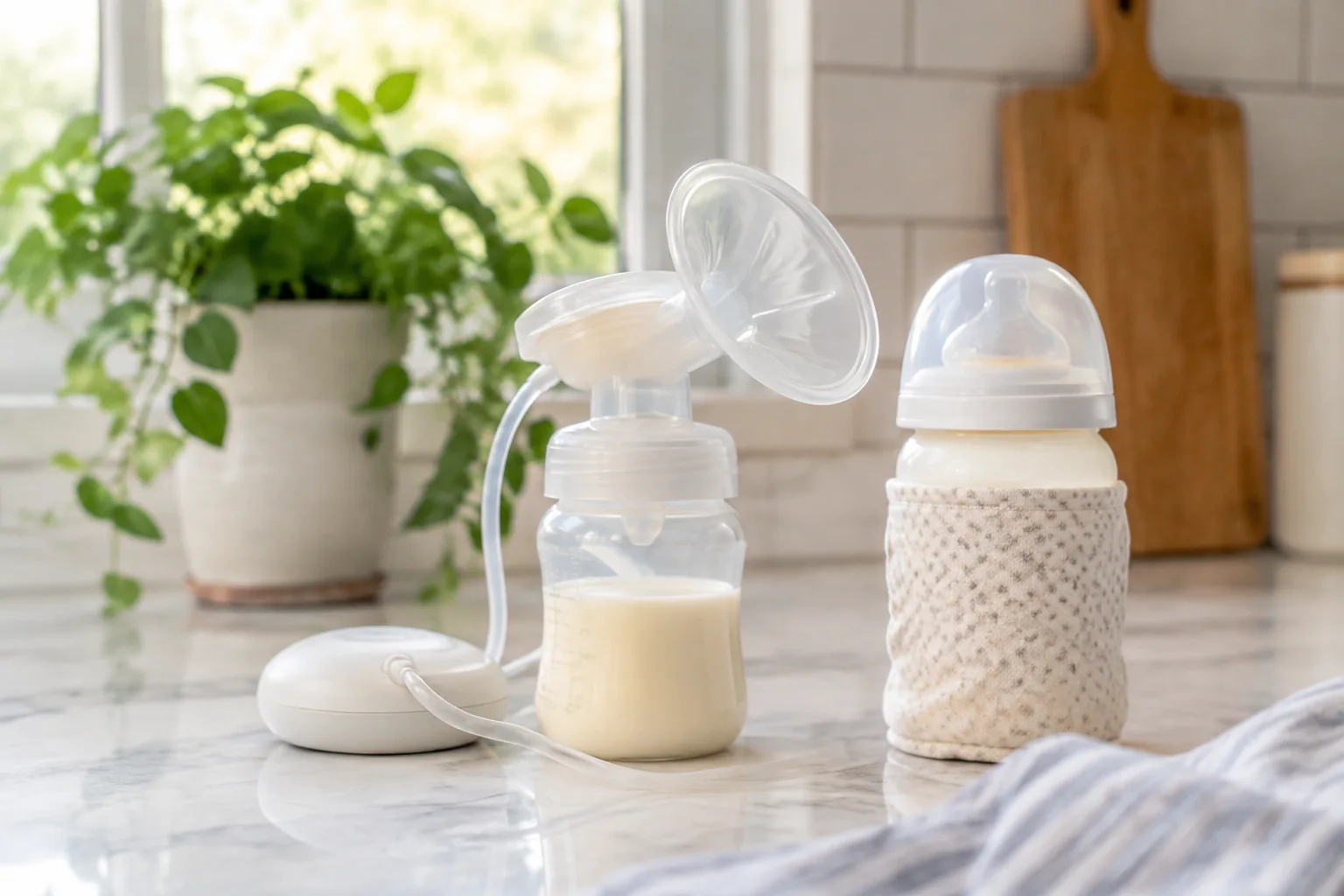
If expressing milk is part of your feeding plan, a lactation worker can address that need separately from when to feed the milk.
Questions about pumping do not mean breastfeeding must stop. ABM supports care that fits the parent and infant when substance use is part of the picture. A question about timing does not prove someone has a drinking disorder. A lactation worker or the infant’s doctor can help with a specific feeding concern.
How quickly does alcohol reach breast milk?
ABM says alcohol passes readily into milk and the amount falls over time. It does not give an exact time when alcohol first appears. If drinking itself needs support, an assessment can compare partial hospitalization addiction care and intensive outpatient care. A lactation worker or infant’s doctor addresses feeding questions.
How a person feels cannot show the exact amount in milk. The ABM timing advice also does not set a rule for moderate-to-high drinking. That guidance says to avoid feeding immediately after such drinking, without giving one wait time for all cases. Do not use a guess about wine or drink strength as an exact clock.
How can you keep infant feeding and caregiving safe?
A feeding-time rule cannot show whether an adult is alert enough to care for an infant. Keep milk exposure and caregiver safety separate. Adult alcohol treatment can address ongoing drinking concerns. You can ask River City Recovery about outpatient support while arranging infant care and feeding guidance with the appropriate clinicians.
- Ask a sober adult to help if you feel impaired.
- Keep feeding time separate from caregiver readiness.
- Do not guess at an exact milk clearance time.
- Get help when the amount or timing is unclear.
Asking someone to help is not a judgment. It does not mean breastfeeding must end. A second caregiver does not change ABM’s advice about feeding after moderate-to-high drinking. It addresses another need: making sure an alert adult can respond to the infant.
Feeding choices depend on the infant and family. ABM supports care and follow-up suited to the people involved. It does not set one backup feeding plan for every family. The infant’s doctor or a lactation worker can help with that plan. River City Recovery provides adult addiction care, not infant or lactation care.
Does alcohol affect milk supply?
Yes. ABM says alcohol can lower hormones involved in milk flow and reduce the milk available. It cannot predict one person’s supply. Assessment of alcohol and other health needs can accompany lactation care. Help with drinking addresses the adult’s substance concerns while a lactation worker considers milk supply.
ABM names oxytocin and prolactin as hormones that alcohol can lower. It links this with less milk available. That finding does not predict how an individual parent’s milk supply will change after a drink. A lactation worker can consider supply in the context of the parent and infant.
Milk supply, alcohol in milk, and caregiver alertness are separate concerns. A family may need help with one or more. Keeping them apart can prevent advice from promising too much. Pumping is not a complete answer to supply, timing, or caregiver questions. A lactation worker can discuss supply and feeding concerns for that family.
| Situation | Guidance or distinction | What it does not say |
|---|---|---|
| Occasional modest drinking | Waiting two hours per drink before feeding is likely safe. | It is not a guarantee for every family. |
| Moderate-to-high drinking | Avoid breastfeeding immediately after this level. | No single waiting time is given for all cases. |
| Pumping after two drinks | The advice addresses amount and time. | No two-drink pump-and-discard rule is stated. |
| Caregiver feels impaired | ABM discusses reduced responsiveness with active substance use generally. | This is not an alcohol-specific feeding-time or impairment test. |
What if drinking feels hard to control while breastfeeding?
If drinking feels hard to control or harms health or family life, a health professional can assess the concern. Assessment can guide alcohol treatment choices and whether intensive outpatient addiction care fits. Those decisions address the adult’s needs; a family’s feeding plan also involves the infant’s doctor or lactation worker.
Alcohol use disorder (AUD) is trouble stopping or controlling drinking despite harmful effects. The National Institute on Alcohol Abuse and Alcoholism (NIAAA) says a health professional looks at symptoms and how many are present. One sign alone does not prove AUD. Its overview of alcohol use disorder describes signs that may need attention.
- Drinking more or longer than you planned.
- Trying to cut down but not being able to.
- Drinking despite health, family, or work problems.
- Needing more to feel the same effect.
- Having symptoms as alcohol wears off.
These signs can be a reason to seek an assessment. They are not a way to diagnose yourself or someone else. NIAAA says treatment may include talk therapy, peer groups, or medicine. The right care can differ from person to person. Questions about AUD do not decide a family’s feeding plan.
Stopping can also raise a medical safety concern. NIAAA warns that people with severe AUD may need medical help to avoid withdrawal. Withdrawal can be life-threatening when someone who drank heavily for a long time suddenly stops. If withdrawal may be a concern, seek medical help before stopping. Do not try a home taper on your own.
You can call for yourself or with general questions about an adult you care about. Staff can explain the outpatient structure and the first steps. An assessment considers present needs and whether the person can participate safely in outpatient care. IOP can follow PHP or serve as a separate option, depending on those needs. PHP provides more intensive outpatient support while participants live outside the facility. Family involvement follows the adult’s wishes, privacy, and care needs. Referrals can address needs outside the program’s scope. A general call can help you understand the options without deciding on a diagnosis or a program in advance. IOP group work may address coping skills, cravings, relationships, and recovery routines. Individual therapy and case management may be included when appropriate. Those adult care services can be considered alongside the family’s separate infant-feeding support.
River City Recovery provides adult outpatient addiction care in Columbus, Georgia. Its programs include a partial hospitalization program and an intensive outpatient program. It does not provide onsite medical detox or inpatient care. For outpatient information, call 706-617-4970 or use the River City Recovery contact page.
Getting help for drinking does not by itself mean breastfeeding must stop. A question about feeding does not prove AUD. ABM supports care shaped to the parent and infant when substance use is involved. A health professional can consider drinking, feeding, and other needs as related but distinct concerns.
Further sources
Frequently asked questions
Can you drink alcohol while breastfeeding?
ABM says waiting two hours per drink after occasional modest drinking is likely safe. It advises avoiding breastfeeding immediately after moderate-to-high drinking. This is guidance, not a promise for every parent or infant. The advice differs by amount and does not set one safe limit for every family. Sources: Primary source.
Do you need to pump and dump after two drinks?
ABM does not state a pump-and-discard rule for two drinks. Its advice addresses the amount consumed and time before feeding. It says the amount of alcohol in milk falls over time. A doctor or lactation worker can help with a feeding concern for a particular parent and infant. Sources: Primary source.
How quickly does alcohol reach breast milk?
ABM says alcohol passes readily into milk, but does not give an exact time for when it first appears. It says the amount falls over time. For occasional modest drinking, ABM says waiting two hours per drink before feeding is likely safe. This does not give a personal clearance time. Sources: Primary source.
Does alcohol affect milk supply?
Yes. ABM says alcohol can lower oxytocin and prolactin, hormones involved in milk flow, and reduce milk available. That finding does not predict an individual parent’s change in milk supply after a drink. A lactation worker can discuss supply and feeding concerns for that family. Sources: Primary source.
When should someone seek help for drinking concerns?
Seek an assessment if drinking feels hard to control or harms health, family life, or daily duties. NIAAA says a health professional assesses signs of alcohol use disorder; one sign alone does not prove it. After heavy, long-term drinking, withdrawal may be dangerous, so seek medical help before stopping if withdrawal is a concern. Sources: NIAAA.
By Tim Francis, SUD Content Specialist. Reviewed by clinical staff.