
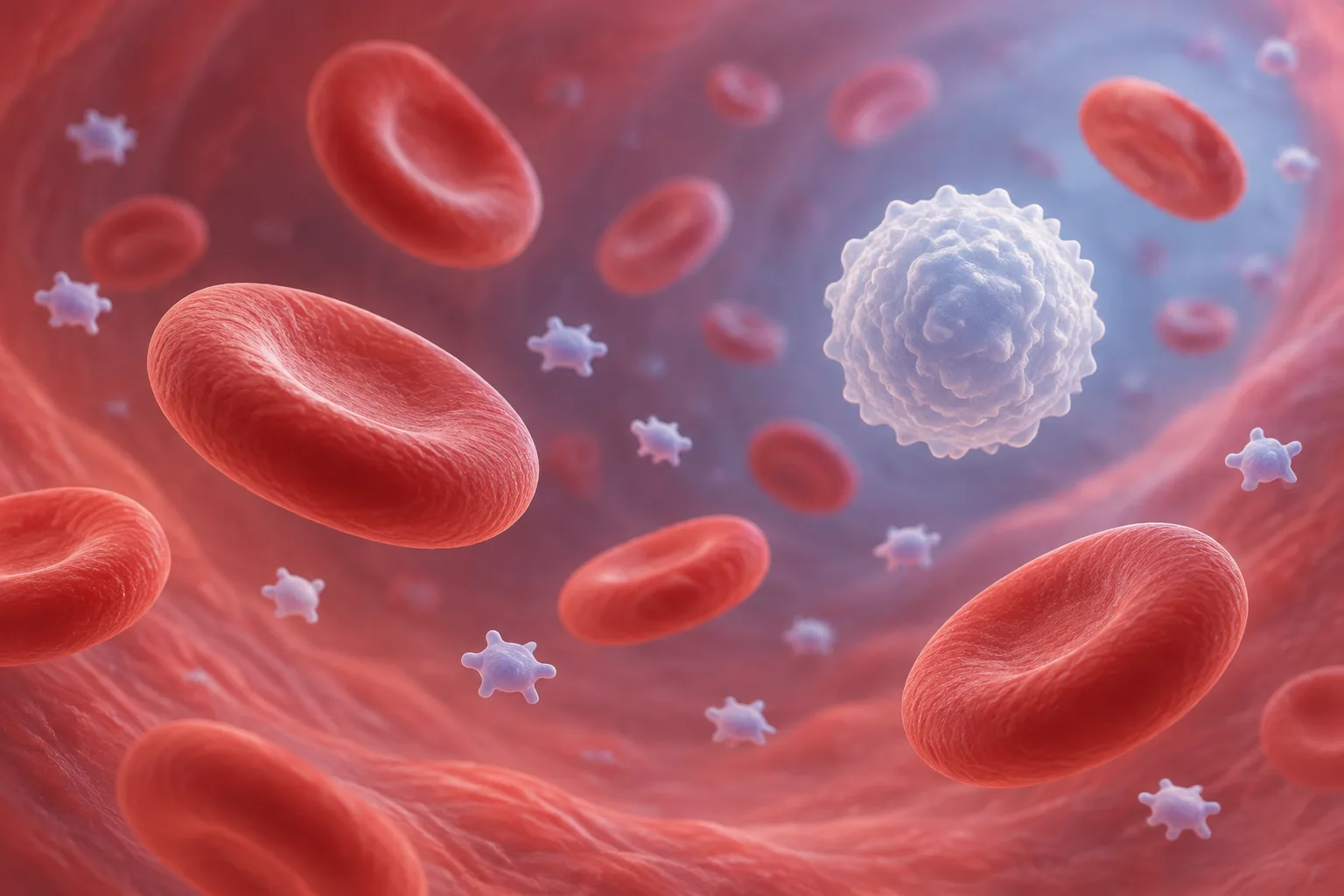
Heavy alcohol use can affect blood cells as well as other body systems. The National Institute on Alcohol Abuse and Alcoholism states that heavy alcohol use can cause anemia, leukopenia, thrombocytopenia, and macrocytosis in its clinical overview of alcohol-related medical complications. These terms describe different findings. They do not all mean anemia, and none independently explains why a particular person's laboratory result is abnormal.
For adults and loved ones in Columbus, GA, the useful starting point is understanding what a result describes before drawing conclusions about its cause. A change in red-cell size is different from a low cell count. Alcohol may be relevant to the medical picture without being the only possible explanation. Questions about blood findings also remain distinct from questions about outpatient addiction treatment.
What is the difference between macrocytosis and anemia?
Macrocytosis describes red blood cells that are larger than usual; anemia concerns a deficiency of red cells or hemoglobin. Understanding that distinction can help keep medical questions clear within an individualized addiction treatment plan. Information about outpatient addiction treatment in Columbus, GA addresses a different question from interpreting an individual blood result.
Cell size and the amount of red cells or hemoglobin are related to different aspects of a blood report. The word macrocytosis identifies a size finding. It does not, by itself, establish whether anemia is present. Likewise, the word anemia does not specify that red cells are enlarged. Treating these words as interchangeable can turn a limited finding into a conclusion that the finding does not support.
NIAAA lists macrocytosis separately from anemia. That wording matters: a list of possible alcohol-related abnormalities is not a statement that every person develops all of them together. It also does not establish that one finding necessarily progresses into another. Each term needs to retain its own meaning when discussing the broader medical picture.
- Size is one question: Macrocytosis concerns enlargement of red blood cells, rather than simply the number of cells.
- Anemia is another question: It concerns red cells or hemoglobin and cannot be established from the word macrocytosis alone.
- Cause is a separate question: Naming a laboratory finding does not establish whether alcohol, another medical issue, or several factors explain it.
Which blood-cell findings does NIAAA identify?
NIAAA identifies findings involving red cells, white cells, and platelets, not only enlarged red cells. Medical interpretation of those findings is separate from learning about River City Recovery's outpatient addiction care or discussing admissions in Columbus, GA. A program description does not explain the cause or significance of a particular blood count.
Different blood-related terms describe different findings
| Term | Cell group | Basic meaning |
|---|---|---|
| Macrocytosis | Red blood cells | Red cells larger than usual |
| Anemia | Red blood cells and hemoglobin | A deficiency involving red cells or hemoglobin |
| Leukopenia | White blood cells | A low white-cell count |
| Thrombocytopenia | Platelets | A low platelet count |
The table translates terminology; it does not provide diagnostic thresholds or classify a result as mild or severe. NIAAA's hematological section names these abnormalities but does not give a probability that a particular person will experience them. It also does not say that an abnormality in one cell group proves that other cell groups are affected.
Cell counts are not the whole story of alcohol's effects on immune health. In a separate section, NIAAA explains that acute and chronic heavy alcohol use can interfere with multiple aspects of the immune response. It describes changes in immune signaling and impaired defense against infection. These are broader biological effects, not simply another name for leukopenia.
That distinction prevents another common misunderstanding: a statement about immune function cannot be substituted for a statement about the number of white blood cells. Conversely, a white-cell count alone does not describe every aspect of immune function. The source discusses both topics, but they answer different questions and should not be collapsed into one conclusion.
What possible pathways connect heavy alcohol use with blood changes?
NIAAA identifies both direct and indirect possibilities while emphasizing uncertainty about their relative contributions. This fits the broader distinction between addressing medical needs in an individualized care plan and describing available outpatient addiction treatment. Recognizing a possible alcohol connection does not identify which biological pathway explains an individual's result.
The key qualification appears directly beside NIAAA's list of blood abnormalities. Its hematological guidance says it is unclear to what extent these abnormalities result directly from marrow toxicity or indirectly from liver disease, hypersplenism, and nutritional deficiencies. That uncertainty belongs with the claim about alcohol's effects, rather than being treated as an unimportant footnote.
A direct marrow effect refers to an effect on bone marrow, the tissue where blood cells are produced. NIAAA names marrow toxicity as a possible explanation, but it does not assign a percentage of cases to that route. An abnormal count therefore does not establish that direct marrow toxicity has occurred. The list of possible effects and the explanation of their mechanisms are different levels of evidence.
The indirect possibilities involve other parts of the medical picture. NIAAA names liver disease, hypersplenism, meaning excessive activity of the spleen, and nutritional deficiencies. These are distinct possibilities, not interchangeable labels. The overview does not assign one exclusive pathway to macrocytosis, another to anemia, and another to low white cells or platelets.
Nutrition also should not become an automatic explanation. Naming nutritional deficiencies as a possible pathway does not identify a particular missing nutrient in someone with an abnormal result. Similarly, mentioning liver disease does not diagnose liver disease. The source supports awareness of several possible pathways while leaving their contribution to an individual finding unresolved.
What can the evidence establish, and what remains uncertain?
The evidence establishes that heavy alcohol use can cause several blood-related abnormalities, but it does not establish the cause of every abnormal result. Keeping that boundary clear matters when discussing whole-person addiction treatment planning or starting an outpatient admissions conversation. Neither a general health association nor an admissions discussion supplies an individual medical diagnosis.
NIAAA's source is an official clinical overview for healthcare professionals, not an original study of blood counts among residents of Columbus, GA. Its short hematological section does not provide a local prevalence estimate, an individual risk calculator, or a percentage of people who develop each named finding. General evidence should not be converted into a prediction about one person or a claim about local residents.
The population language matters too. NIAAA specifically attributes these blood abnormalities to heavy alcohol use. In the same overview's drinking-level definitions, heavy drinking includes four or more drinks on any day or eight or more per week for women, and five or more on any day or fifteen or more per week for men. Those are drinking-pattern definitions, not laboratory thresholds.
Being above a drinking-pattern threshold does not establish that a particular blood abnormality is present. The blood-system passage also does not identify a precise amount of alcohol at which each finding begins. It would therefore be inaccurate to turn the general definitions into a cutoff that proves or excludes an alcohol-related explanation for a blood result.
Other explanations remain part of the clinical question. NIAAA's brief listing is not a complete differential diagnosis, meaning a complete account of the possible causes of a finding. It does not rule out unrelated medical causes, establish that every abnormal result has the same cause, or provide a recovery timeline. A label, an explanation, and a prognosis are three different things.
How do blood-related medical questions fit into individualized addiction care?
Medical questions can belong in whole-person planning without being answered by the addiction program itself. River City Recovery's guide to individualized addiction treatment plans explains that accompanying medical and mental health needs deserve attention and that services may need coordination. Its admissions information addresses outpatient options and fit, not a promise to diagnose or treat blood-cell disorders.
The guide makes a useful distinction between the setting of care and the components of care. A program schedule describes when and where treatment occurs. Individualization concerns which needs receive attention, which approaches fit, and how services connect. A blood-related medical concern may be relevant to that broader discussion without becoming a condition that the outpatient addiction program itself manages.
Coordination also does not require every service to occur in the same building. The guide describes a general model involving an addiction specialist, a local primary-care physician, and a therapist. That example illustrates how responsibilities can connect across providers. It does not establish that River City Recovery has a particular referral partnership, an onsite blood specialist, or a service for evaluating the abnormalities.
Useful topics in a coordinated conversation include:
- The finding: Whether the discussion concerns cell size, a low count, anemia, or more than one result.
- The explanation: Which causes are established and which remain possibilities rather than conclusions.
- The responsibility: Which healthcare professional is addressing the medical question, distinct from outpatient enrollment.
- The connection: How relevant medical concerns and substance-use or mental-health needs fit into the broader plan.
Practical circumstances matter without determining the medical explanation. Work, caregiving, transportation, and other obligations may affect how outpatient participation fits into daily life. They do not establish the cause of macrocytosis or a low blood-cell count. Individualized planning can recognize both kinds of needs while preserving the difference between medical interpretation and practical support.
River City Recovery offers outpatient addiction treatment in Columbus, GA. For questions about those services, Contact Admissions. A routine admissions conversation does not replace appropriate medical care. A medical emergency requires an appropriate emergency response rather than waiting for a routine message or treatment-planning discussion.
Frequently asked questions
Does large red-cell size mean anemia?
No. Macrocytosis describes red blood cells that are larger than usual; anemia concerns reduced red cells or hemoglobin. NIAAA lists them as separate possible effects of heavy alcohol use. A size finding alone does not establish anemia, explain its cause, or determine what the rest of a person's blood results mean.
Can alcohol affect more than red cells?
Yes. NIAAA's clinical overview states that heavy alcohol use can cause leukopenia, a low white-cell count, and thrombocytopenia, a low platelet count, as well as anemia and macrocytosis. This does not mean everyone develops all four findings. The overview does not provide an individual probability or establish which findings are present in one person.
Does an abnormal count prove alcohol is the cause?
No. NIAAA identifies heavy alcohol use as a possible cause of several blood abnormalities, but that general statement does not explain every abnormal count. Its overview also preserves uncertainty about the underlying pathways. A laboratory finding identifies something about the blood; it does not independently establish alcohol as the cause or exclude other medical explanations.
What pathways does NIAAA identify?
NIAAA identifies direct marrow toxicity and indirect effects involving liver disease, hypersplenism, and nutritional deficiencies. It explicitly says the extent to which these routes explain the abnormalities is unclear. These possibilities should not be turned into a diagnosis of marrow injury, liver disease, spleen dysfunction, or a particular nutritional deficiency from a blood result alone.
Why may a blood count need broader evaluation?
Blood-related terms describe different findings, and identifying a finding is not the same as establishing its cause. NIAAA's overview names several possible pathways but does not provide a complete diagnostic framework for an individual result. Broader medical interpretation remains separate from addiction admissions, and individualized planning can recognize medical needs without assuming one program provides every service.